Garner's water system is owned and run by Raleigh Water, so Raleigh's cross-connection program sets the rules: most houses have only a dual check in the meter box, and testable residential irrigation assemblies are tested every three years by July 1. Call the number on this page to be connected with a local plumber in Garner.
Do Garner homeowners have to test anything?
Most don't. The City of Raleigh owns and operates the water system serving Garner's urban service area, and under Raleigh Water's Cross Connection Control Program the typical house is protected by a non-testable dual check device in the meter box. There's no test to schedule for it.
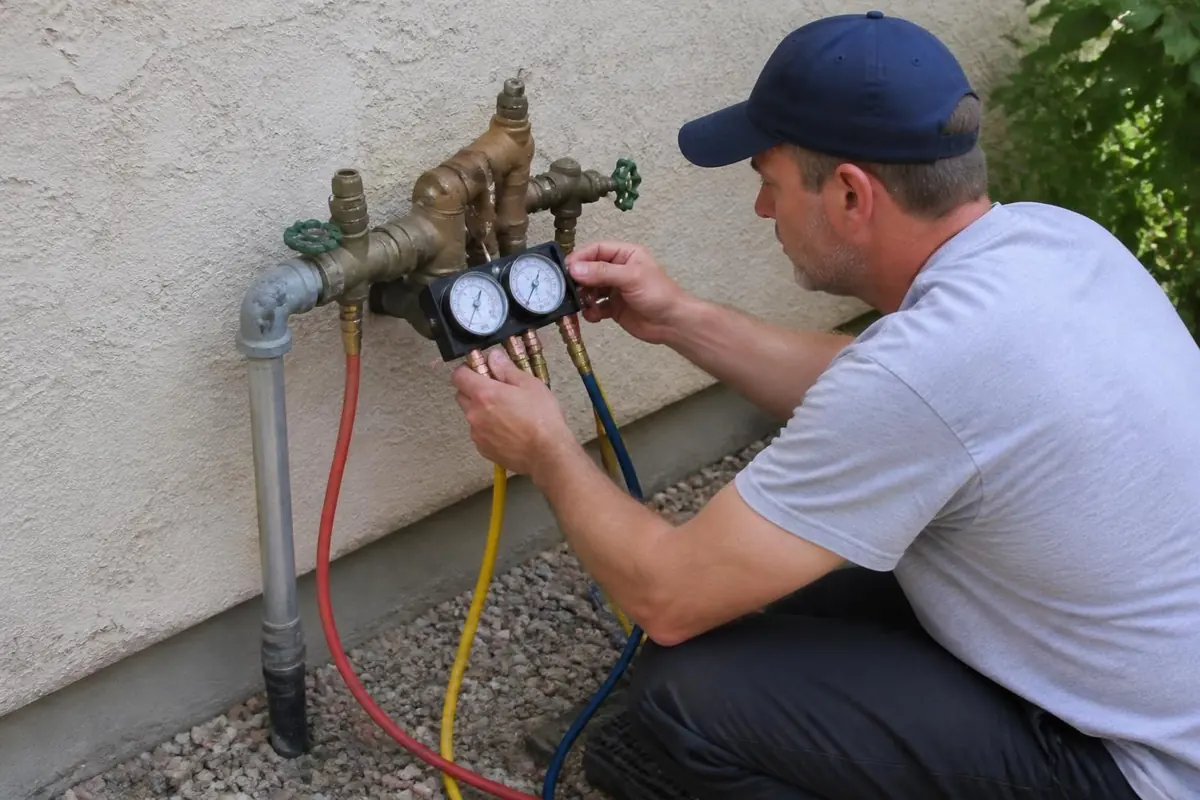
The exception is a testable assembly, most often on an irrigation system. Raleigh's schedule puts residential irrigation assemblies on a three-year cycle due by July 1. Commercial irrigation is tested every year by July 1. Domestic and fire assemblies are tested at installation, at replacement and annually. Every test has to be done by a City of Raleigh Certified Tester, and reports are filed electronically through VEPO.
Why might a Garner property need more work than a newer suburb?
Garner has the oldest housing of the inner Wake towns: about 28% of homes were built before 1980, much more than Cary, Apex or Knightdale. In those older neighborhoods, irrigation was often added years after the house was built, sometimes spliced into whatever line was handy. A testable assembly belongs close to the meter, ahead of other branches, and fixing a poorly placed one can mean some pipe work on top of the test.
Ownership follows Raleigh's split. The City maintains the line up to the property line, and the owner is responsible from there to the house, so the irrigation assembly and any repairs to it are yours.
What does a typical backflow visit involve?
For a routine test, the tester connects a differential gauge to the test cocks, checks that each check valve holds, and files the result. If a check is fouled or a rubber part is worn, the device gets cleaned or rebuilt and tested again. Freeze damage is the other common call: an exposed assembly left full of water through a hard cold snap can crack and has to be replaced. New installations need a permit, which in Garner goes through the Town's online Permit and Inspection Portal; paper applications are no longer accepted.
Local note
Garner sits beside Lake Benson, one of Raleigh Water's two drinking water sources. Backflow protection on your property is part of what keeps that shared supply clean.
Backflow Testing questions in Garner
What is the little valve in my meter box, and does it need testing?
How often does a testable backflow assembly have to be checked?
What happens if my assembly fails its test?
I just bought a home with irrigation. What should I check about backflow?
More plumbing services in Garner
Backflow Testing nearby
Helpful guides
Sources
- Raleigh Water: cross connection control program
- Raleigh Water: backflow testing schedule
- City of Raleigh: merger communities water and sewer
- Point2Homes: Garner housing by year built
- Raleigh Water: lead and service line responsibility
- Town of Garner: inspections
- Raleigh Water: water and wastewater treatment plants
Last updated: